Pending home sales up for 17th consecutive month

NAR: Number of homes under contract in September up 14.5 percent from a year go

BY INMAN NEWS, THURSDAY, OCTOBER 25, 2012.

Inman News®

<a href="http://www.shutterstock.com/pic.mhtml?id=106899653" target="_blank">Housing trend</a> image via Shutterstock.

A pending home sales index maintained by the National Association of Realtors showed an annual gain in September for the 17th month in a row.

NAR’s latest Pending Home Sales Index, released today, showed the number of existing homes under contract in September up 0.3 percent from August and 14.5 percent from a year ago.

The index, which represents contracts signed but not yet closed, has settled at 99.5 in September. An index score of 100 is equal to the average level of sales contract activity in 2001, a year in which sales were in line with historical norms. Signed contracts typically close one or two months after the sign date.

“The level of pending contracts has remained very steady implying that this recovery is holding its momentum,” said Lawrence Yun, NAR’s chief economist. Yun said the steady and strong year-over-year increase in the index “is pointing in the right direction.”

All regions saw double-digit year-over-year PHSI increases, except for the West, where it rose just 0.8 percent to 106.9 for the year (and 4.3 percent for the month) on account of tight inventory.

The Northeast saw the largest yearly jump in September of any region with a 26.1 percent increase to an index level of 79.3, which represented a 1.4 percent bump from August to September in the region.

In the Midwest, the index rose 19.3 percent from September 2011 to reach 89.5, which, however, represents a 5.8 percent dip from August’s level.

And in the South, pending home sales jumped 17.6 percent from September 2011 to settle at an index level of 111.5, a 1 percent jump from the index level in August.

COURTESY OF YOUR NUMBER ONE ARCADIA REAL ESTATE AGENT

Over 25 Percent of Home Price Depreciation Due to Proximity of Foreclosures: Study

BY JANN SWANSON

The enormous numbers of foreclosures over the last six years have, of course, had immediate impacts on the families who lose their homes. The effects include physical displacement, drained savings and retirement accounts, and ruined credit. They also suffer longer-term financial impacts such as losing the ability to tap home equity for business or education purposes or retirement as well as losing the financial cushion home equity provides and the main vehicle for transferring wealth inter-generationally.

But there are ramifications to foreclosures that extend beyond those families who actually lose their homes. Communities with high concentrations of foreclosures lose tax revenue and incur the financial and non-financial costs of abandoned properties and neighborhood blight, while homeowners living in close proximity to foreclosures suffer loss of wealth through depreciated home values.

Three researchers from the Center for Responsible Lending (CRL) have produced an updated report on this secondary cost of mortgage foreclosures with a particular focus on the damage being done to communities of color. Collateral Damage: The Spillover Costs of Foreclosure released Wednesday was written by Debbie Gruenstein Bocian, Peter Smith and Wei Li and is an update of three earlier reports on the issue produced by the Center. The last report was issued in 2009.

The authors looked at loans that entered foreclosure between 2007 and 2011 using data collected by the federal government under the Home Mortgage Disclosure Act (HMDA) and a second data set from Lender Processing Services (LPS). They calculated the number of foreclosure starts for each census track then calculated the loss of value of neighboring homes within 1/8 mile of the foreclosed property.

The authors found that $1.95 trillion in property value has been or will be lost by residents who live in close proximity to a property that has been foreclosed. This figure includes the spillover impact of homes that have been foreclosed as well as future losses from foreclosures that are in process.

Over one-half of this loss has been experienced in communities of color. Minority neighborhoods have lost or will lose $1 trillion in home equity largely because of a high concentration of foreclosures in these neighborhoods.

In all neighborhoods these losses average out to $21,077 in household wealth or about 7.2 percent of the home’s value. However, in neighborhoods of color the average loss is $37,084 or 13.1 percent of the home’s value.

Despite the magnitude of these losses the authors caution that they represent only the wealth that has been lost or will be lost as a direct result of being in close proximity to homes that have begun the foreclosure process. “We do not include in our estimate the total loss in home equity that has resulted from the crisis (estimated at $7 trillion),” they state, “the negative impact on local governments (from lost tax revenue and increased costs of managing vacant properties) or the non-financial spillover costs, such as increased crime, reduced school performance and neighborhood blight.

COURTESY OF YOUR NUMBER ONE ARCADIA REAL ESTATE AGENT

Zillow to show homes in foreclosure, before they are listed

Company expects some criticism for putting personal data at consumers’ fingertips

ForeclosureA Cook COunty sheriff’s deputy puts a foreclosure notice on the door of a Chicago home. (Nancy Stone/Chicago Tribune photo / October 24, 2012)
By Mary Ellen PodmolikTribune staff reporter8:12 a.m. CDT, October 25, 2012

Zillow will display detailed information on approximately 1.5 million homes that are in foreclosure but are not yet for sale, in a bid to position itself as the go-to web site for homebuyers.All of the data that Zillow is making available is public information but until now, accessing it typically required buying a subscription to a website or a trip to county courthouses, digging through individual case records. By putting such personal data at consumers’ fingertips, the Seattle-based realty website acknowledges it may face criticism regarding privacy concerns.However, the Seattle-based company views its latest site enhancement, which went live late Wednesday night, similarly to when it shook up the real estate market in 2006 by debuting a site that listing individual home values, called ‘Zestimates,’ of for-sale and not-for-sale homes. The site today has information on more than 110 million properties. Back in 2006, the stated goal was to make potential homebuyers more market-savvy shoppers. It doesn’t see the addition of foreclosure data any differently.”It’s all part of the public record and what the buyer chooses to do with information is up to them and their real estate agent,” said Amy Bohutinsky, Zillow’s chief marketing officer. “Ultimately, what we’re trying to do is help buyers get a better picture.”

Anyone who logs in with a free account will have access to the information, which will also include completed foreclosures that have not been listed for sale.

The homes listed in ‘pre-market’ inventory will be properties where a foreclosure has been filed against the borrower but the action is not resolved. Among the details available for each property will be the address, the date and amount of the original mortgage, the unpaid balance and the dollar amount past due. It also will show the party that initiated the foreclosure action, an estimate of what the foreclosure sales price might be, based on the sales prices of nearby foreclosures, and details of where it is in the process. If the home was previously listed on Zillow as a for-sale home, that picture will be used. Otherwise, there will be a satellite view of the neighborhood.

The borrower’s names will not be listed.

When the additional information was added to the site late Wednesday night, it included 11,000 pre-market single-family homes and condominiums just within the city of Chicago.

Home shoppers have a need for the extra information, according to Bohutinsky, because the dearth of available homes listed for sale is constraining the housing market at a time when there are indications that the market has bottomed nationally and mortgage rates remain well under 4 percent for a 30-year, fixed-rate loan.

“What buyers can learn from this is what homes might be listed for sale soon, or they can actually try and buy the home out of the foreclosure process by making an offer to the owner or the bank,” she said. “It opens up a whole new category of inventory to people that they didn’t know existed.”

That so-called shadow inventory has been on the mind of real estate agents for years, as they waited for properties in foreclosure to make their way through the process and return to the market for resale. Foreclosure proceedings first slowed because of the volume of cases and more recently because of various state and federal investigations into how banks handled the cases. With many of those probes behind the mortgage lending industry, lenders are again seeking to push foreclosure cases through the system.

Still, according to RealtyTrac, it takes an average of almost two years to foreclose on a home in the Chicago area, so a property listed in Zillow’s pre-market inventory could be there a while before it’s officially listed for sale. On Thursday, RealtyTrac reported that foreclosure activity in the Chicago area rose 34 percent from 2011’s third quarter. During the past three months, notices of default, the first step in the foreclosure process were filed against 18,923 homes locally.

As information on those properties is entered in court databases, it would be added to Zillow’s site, which will be updated daily.

The company calls the addition of pre-market inventory a step forward in ‘consumer empowerment.”  Housing advocacy groups and counselors aren’t so sure.

“While, generally speaking, we support disclosure of public data, there is a big leap from the general case to a specific one,” said Katie Buitrago, a senior policy associate at Woodstock Institute, a Chicago-based research and public policy group. “It’s important to look at Zillow’s methodology, data coverage, and compliance with privacy laws before coming to any conclusions. Given that it’s not Zillow’s goal to help observers understand foreclosure trends but to facilitate real estate transactions, I would be concerned that they are not providing sufficient context for the general public to put foreclosure trends into perspective

Debra Olson, executive director of the DuPage Homeownership Center, worries that the easy access to personal data on homeowners’ financial problems not only makes them more likely to receive low-ball offers on homes but may also make them a target for mortgage-related scams.

“Many of the families that come in here that are in pre-foreclosure are able to get it turned around, either through the Illinois Hardest Hit program or through mortgage modifications or other means,” Olson said. “I understand that the information is already available through public court records but it takes some real digging. This just seems much too easy for predators.”

mepodmolik@tribune.com
Twitter @mepodmolik


COURTESY OF YOUR NUMBER ONE ARCADIA REAL ESTATE AGENT

New home sales jump to near 2-1/2 year high in September

New housing construction is seen in Poolesville, Maryland, October 23, 2012. New U.S. single-family home sales surged in September to their highest level in nearly 2-1-2 years, further evidence the housing market recovery is gaining steam. REUTERS-Gary Cameron
New housing construction is seen in Darnestown, Maryland, October 23, 2012. New U.S. single-family home sales surged in September to their highest level in nearly 2-1-2 years, further evidence the housing market recovery is gaining steam. REUTERS-Gary Cameron

WASHINGTON | Wed Oct 24, 2012 10:50am EDT

(Reuters) – New single-family home sales surged in September to their highest level in nearly 2-1/2 years, further evidence the housing market recovery is gaining steam.

The Commerce Department said on Wednesday sales increased 5.7 percent to a seasonally adjusted 389,000-unit annual rate – the highest level since April 2010, when sales were boosted by a tax credit for first-time homebuyers.

Though August’s sales pace was revised down to a 368,000-unit pace from the previously reported 373,000 units, the tenor of the report was relatively strong, with the median home price of a new home rising 11.7 percent from a year ago.

Economists polled by Reuters had forecast sales rising to a 385,000-unit rate last month.

While the increase in sales last month added to signs of a broadening housing market recovery, new home sales are just over a quarter of their peak in July 2005. Compared to September last year, new home sales were up 27.1 percent.

The housing market is on the mend after collapsing in 2006 and dragging the economy through its worst recession since the Great Depression. Home sales are increasing, pushing down the stock of unsold properties, giving a modest lift to house prices and builders’ confidence to take on new projects.

However, the housing market recovery lacks the muscle to take the baton from manufacturing as the main driver of the economic recovery.

The recovery in the sector is being supported by record-low mortgage rates, which have been held down by the Federal Reserve’s ultra-accommodative monetary policy stance.

The U.S. central bank has targeted housing as a channel to boost growth, announcing last month that it would buy $40 billion in mortgage-backed securities per month until the outlook for employment improved significantly.

Though the inventory of new homes on the market rose 1.4 percent in September, it remained near record lows.

At September’s sales pace it would take 4.5 months to clear the houses on the market, the lowest since October 2005, down from 4.7 months in August.

Sales last month were up in three of the four regions. They tumbled 37.3 percent in the Midwest.

(Reporting By Lucia Mutikani; Editing by Andrea Ricci)

COURTESY OF YOUR NUMBER ONE ARCADIA REAL ESTATE AGENT

Housing Market News: Existing Home Sales Down, Prices Up

Learn more about the latest housing market trends for existing home sales, new construction and mortgage interest rates.

ARTICLE |  | BY ADRIANA REYNERI

Sales of existing homes slowed in the month of September, but prices rose for the seventh consecutive month, according to a report released today by the National Association of Realtors, which hails the data as continued signs of a genuine recovery for the housing market.

Total existing home sales fell 1.7 percent from August to September to a seasonally adjusted annual rate of 4.75 million, but the pace of sales was 11 percent higher than the 4.28 million rate for September 2011, according to the realtors group. The national median price for all types of existing homes – including townhomes, condominiums and co-ops – was $183,900 in September, a year-over-year increase of 11.3 percent from September 2011.

“Despite occasional month-to-month setbacks, we’re experiencing a genuine recovery,” Lawrence Yun, the association’s chief economist, said in a statement. “More people are attempting to buy homes than are able to qualify for mortgages, and recent price increases are not deterring buyer interest.”

Distressed sales – homes in foreclosure or sold at deep discounts – made up nearly one-fourth (24 percent) of existing home sales in September, up from 22 percent in August but less than the 30 percent share for September 2011. Foreclosures sold at an average discount of 21 percent below market value in August, while short sales were discounted an average of 13 percent.

Total housing market inventory fell 3.3 percent in September to 2.32 million existing homes, a 5.9-month supply at the current sales rate. A year ago, the housing market had an 8.1-month supply of existing homes for sale.

“The shrinkage in housing supply is supporting ongoing price growth, a pattern that could accelerate unless home builders robustly ramp up production,” Yun said. Home builders appear to be doing just that, according data released by the Commerce Department on Wednesday. Housing starts rose by 15 percent in the month of September, following a 4 percent increase in August. The spike in activity brings the current pace of home construction to a seasonally adjusted annual rate of 872,000, a 35 percent increase from September 2011. The number of new building permits issued, a forward-looking indicator, rose nearly 12 percent from August to September. Home builders also expressed increasing confidence in the housing market, according to data released by the National Association of Home Builders on Tuesday.

Home mortgage interest rates remain near record lows, according to Freddie Mac, which reported an average rate of 3.37 percent for a 30-year fixed-rate mortgage, just off the record of 3.36 percent, and a new average low for a 15-year fixed rate mortgage of 2.66 percent.  Affordable rates are encouraging some buyers to enter the housing market, but tight credit conditions are continuing to constrain sales, according to anlaysts.


COURTESY OF YOUR NUMBER ONE ARCADIA REAL ESTATE AGENT

Hillsides Volunteer Network’s Ice House All-Star Comedy Show

  ICE HOUSE COMEDY SHOW
Ice House Comedy Show

Purchase your tickets for Hillsides Volunteer Network’s Ice House All-Star Comedy Show to Benefit

Hillsides, on Sunday, October 14, 2012.

Felix Baumgartner to attempt record-breaking supersonic freefall Tuesday

By Mike Wall | Published October 08, 2012 |Space.com

  • Felix Baumgartner prejump 2.jpg

    July 25, 2012: Pilot Felix Baumgartner of Austria steps out from the capsule during the second manned test flight for Red Bull Stratos in Roswell, New Mexico. (Jay Nemeth / Red Bull)

  • Felix Baumgartner prejump 3.jpg

    July 25, 2012: The balloon lifts up during the second manned test flight for Red Bull Stratos in Roswell, New Mexico. (Jorg Mitter/Red Bull)

  • Felix Baumgartner prejump 4.jpg
    Red Bull
  • Felix Baumgartner prejump 5.jpg

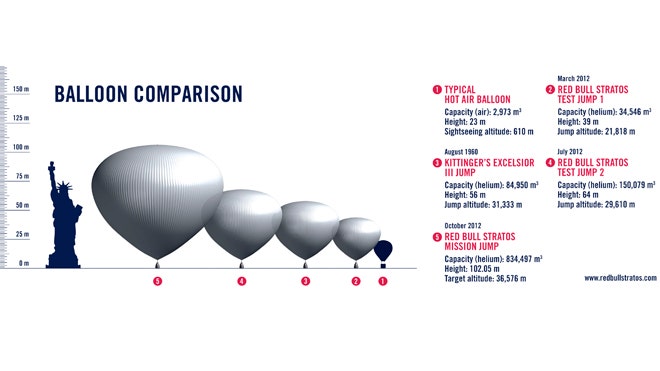
    The Red Bull Stratos balloon is ten times larger than the balloon used by the current record holder, Joe Kittinger, who jumped from an altitude of 102,800 ft in 1960. This graphic gives you a comparison. (Red Bull)

  • Felix Baumgartner prejump.jpg

    July 25, 2012: Pilot Felix Baumgartner of Austria celebrates after he lands at the desert during the second manned test flight for Red Bull Stratos in Roswell, New Mexico. (balazsgardi.com / Red Bull)

Next Slide Previous Slide

UPDATE: Baumgartner’s jump on hold Tues. a.m., pending better weather. Read more

On Tuesday morning, Austrian daredevil Felix Baumgartner will attempt to break the world record for highest-ever skydive, leaping from a balloon nearly 23 miles above Earth’s surface.

If all goes according to plan, Baumgartner will step into the void 120,000 feet (36,576 meters) above southeastern New Mexico early Tuesday, then plummet to Earth in a harrowing freefall that will see him become the first skydiver to break the sound barrier.

After Baumgartner deploys his parachute and floats safely to the desert floor, he and the other architects of his mission — which is known as Red Bull Stratos — can celebrate breaking a skydiving record that has stood for more than 50 years.

One of those congratulating Baumgartner will likely be Joe Kittinger, who set the current record of 102,800 feet (31,333 m) back in 1960 while a captain in the U.S. Air Force. Kittinger serves as a Red Bull Stratos adviser.

If everything works out on Tuesday, Baumgartner will also shatter the marks for fastest freefall, longest-duration freefall and highest manned balloon flight. But the daredevil says his leap is about more than just etching his name in the record books.


‘Fear has become a friend of mine. It’s what prevents me from stepping too far over the line.’

– Felix Baumgartner


“Red Bull Stratos is an opportunity to gather information that could contribute to the development of life-saving measures for astronauts and pilots — and maybe for the space tourists of tomorrow,” Baumgartner said in a statement. “Proving that a human can break the speed of sound in the stratosphere and return to Earth would be a step toward creating near-space bailout procedures that currently don’t exist.”

Baumgartner’s 55-story-high balloon is slated to launch from Roswell, N.M. at dawn Tuesday, weather permitting. Winds must not exceed 2 mph (3.2 kph) at liftoff to ensure that the balloon — whose material is 10 times thinner than a plastic sandwich bag — isn’t damaged, Red Bull Stratos officials said.

Baumgartner will ride aboard a custom-built pressurized capsule that weighs about 2,900 pounds (1,315 kilograms). A hard landing during a July 25 practice jump from 97,146 feet (29,610 m) damaged the capsule, and the daredevil’s record-breaking attempt was delayed while his team made the necessary repairs.

During the July 25 jump, Baumgartner reached a top freefall speed of 537 mph (864 kph) — about as fast as a commercial airliner. But while his capsule got knocked around a bit, the skydiver landed safe and sound.

Baumgartner said he is nervous about Tuesday’s leap from the stratosphere. But the 43-year-old daredevil — who has jumped from some of the world’s tallest buildings and soared across the English Channel in freefall using a carbon wing — regards a tinge of fear as a good thing.

“Having been involved in extreme endeavors for so long, I’ve learned to use my fear to my advantage,” Baumgartner said. “Fear has become a friend of mine. It’s what prevents me from stepping too far over the line.”

Red Bull Stratos has described the Oct. 9 attempt as a jump from the edge of space. However, space is generally considered to begin at an altitude of 62 miles (100 km), or 327,000 feet.

Read more: http://www.foxnews.com/science/2012/10/08/skydiver-record-breaking-supersonic-freefall/#ixzz28ow9lrTH


COURTESY OF YOUR NUMBER ONE ARCADIA REAL ESTATE AGENT

Will The Real Credit Score Please Stand Up?

by Broderick Perkins

The credit score you buy may not be the credit score your lender uses when you apply for credit and, fortunately, most of the time it doesn’t matter.

However, for what the Consumer Financial Protection Bureau (CFPB) considers a “substantial minority,” the difference could make or break a mortgage application or application for other credit.

In from 1 percent to 24 percent of the time, the difference between consumer-purchased and creditor-purchased credit scores could toss consumers into one, two or more different credit-quality categories.

Which way the score goes, better or worse, often isn’t clear.

The CFPB’s new “Analysis of Differences between Consumer- and Creditor-Purchased Credit Scores”is a follow up to CFPB’s report earlier this year, “The Impact of Differences Between Consumer- and Creditor-Purchased Credit Scores,” which revealed the different sources and types of credit scores and potential for harm associated with the differences.

The new report attempts to quantify the impact of those differences and says consumers do not know ahead of time whether the scores they purchase will closely track, vary moderately or vary significantly from a score sold to creditors.

What’s a credit score?

Credit scores are a numerical representation of your credit report. The lower the score, the worse your credit and the greater your risk for default on credit. Conversely, the higher the score, the lower your risk. How you handle your credit raises or lowers your score.

Lenders widely use credit scores to make a decision about your application for most types of credit, including mortgages, auto loans, credit cards, personal loans and others. Credit scores are also used to make decisions about insurance, rental applications, even jobs.

Scores also determine if your creditor will raise or lower your credit limits, change your interest rate or cut you off from existing credit. High credit scores will also get you the best credit rates and terms, while low scores will make you pay more for credit — if you can get it.

By federal law, credit scores are free under certain circumstances, typically after the fact, say, because a lender rejected your application.

Otherwise you pay $10 to $20 for the privilege of buying your score, often from companies that attempt to sell you other questionable services bundled with your credit score purchase.

Purchased credit scores aren’t gospel

CFPB’s new report advises consumers not to rely upon purchased credit scores as a guide to how creditors will actually view their credit quality.

Because credit scores can vary from the scores actually used to approve or decline credit, consumers have no way of knowing if the purchased scores are the same, higher or lower than those used by creditors.

• If a purchased score leads the consumer to overestimate lenders’ likely assessment of his or her creditworthiness, the consumer might be likely to apply for credit lines that would not be approved, with a cost of wasted time and effort on both the consumer’s and lender’s part.

• A consumer who underestimates a lender’s likely assessment of his or her creditworthiness, might fail to or delay applying for credit to buy a house or a refinance.

A consumer might also apply to lenders who offer less favorable terms than the borrower is qualified for or accept a less favorable offer than necessary.

The study also admonishes and advises firms selling scores to consumers to disclose to consumers those credit score differences and the potential impact from those differences.

Given the CFPB’s new oversight on consumer financial matters, including the operations of consumer credit reporting agencies, regulations to mandate such disclosures are likely.

The Dodd-Frank Wall Street Reform and Consumer Protection Act directed the Consumer Financial Protection Bureau (CFPB) to compare credit scores sold to creditors and those sold to consumers by nationwide credit reporting agencies to look at the differences.

CFPB analyzed credit scores from 200,000 credit files from each of the three major nationwide CRAs: TransUnion, Equifax, and Experian.

CFPB found:

• Different scoring models would place consumers in the same credit-quality category 73 to 80 percent of the time.

That is, if a consumer had a good score from one scoring model, the consumer likely had a good score on another model.

• Different scoring models would place consumers in credit-quality categories that are off by one category 19 to 24 percent of the time.

• Different scoring models would place consumers in credit-quality categories that are off by two or more categories from 1 to 3 percent of the time.

Published: October 4, 2012

COURTESY OF YOUR NUMBER ONE ARCADIA REAL ESTATE AGENT

How to choose your next neighborhood wisely

Mood of the Market

BY TARA-NICHOLLE NELSON, MONDAY, OCTOBER 1, 2012.

Inman News®

<a href="http://www.shutterstock.com/pic.mhtml?id=92728492" target="_blank">Neighborhood</a> image via Shutterstock.Neighborhood image via Shutterstock.

If you plan to buy your next home in your current town, you probably think you already know precisely what neighborhood(s) you’d entertain.

You might have driven around and spotted a street you’d love to call your own, or maybe you’ve always heard rave reviews of the schools, shops and other quintessential elements of a particular part of town. But there are numerous Internet resources that can surface gems you might not know about.

And, needless to say, if you’re relocating to a new area entirely, these same sites can make the daunting challenge of narrowing your house hunt down to the just-right city and neighborhood much less overwhelming — and much more likely to result in success.

Here are a handful of the online neighborhood-finding resources that I believe are vastly underutilized by house hunters:

Article continues below 
Advertise with Inman

1. NabeWise. NabeWise is where you go to get a real taste for a neighborhood’s flavor, online. This is where you find out where the hipsters, families, pet lovers or musicians live in your target town. It’s also where you can get a feel for whether the neighborhood tends more toward dive bars or farmers markets, and whether residents who’ve rated it were more inclined to call it gritty or peaceful; these are actual neighborhood reputation label options that the site offers and that visitors freely use.

Beyond the helpful and, in my experience, accurate neighborhood “flavor” ratings and many photos of the most popular neighborhoods in the couple of dozen cities it covers, NabeWise also offers uber-helpful, insight-rich blog posts from neighborhood residents, and surfaces nearby neighborhoods for those who think the location of a particular neighborhood is perfect, but not the noise level

2. Nextdoor. The age-old measure of friendly neighbors was how amenable they might be to a request to borrow a cup of sugar. Then, it was all about whether an area had its own Neighborhood Watch, then whether it throws a block party for National Night Out. Increasingly, though, the measure of a connected neighborhood is its social infrastructure online: Email lists and Facebook groups can be a good sign, but are often tough to find unless a home’s seller or the neighbors simply tell you they exist.

Nextdoor is a site where nothing but neighborhood social networks live and operate in one user-friendly place. It’s relatively new, so chances are good that your target neighborhood might not be there (yet), but if you do happen to see that the neighborhood of your dreams has a Nextdoor network, that’s a very good sign.

3. Walk Score. If you’re looking for a neighborhood with high “walkability” (as defined by WalkScore.com to encompass everything from ample amenities for everyone from bus riders to walkers to bicyclists, to shopping areas where the storefronts are very near to the sidewalks), this is the authoritative resource.

Walk Score actually assigns cities, neighborhoods, streets and individual addresses a numerical Walk Score rating that is exceedingly useful in helping buyers compare homes and neighborhoods on walkability; helping relocators start to get a feel for the daily lifestyle they would experience in various parts of the same town; and even helping sellers communicate their home’s walkability in a meaningful way to buyers.

4. StreetAdvisor. StreetAdvisor is like Yelp for neighborhoods: You type in a city price range or “personality” factor, and it gives you the local neighborhoods that have rated the highest on these elements, along with oodles of reviews of that part of town by the locals who live there. It also has a handy Q-and-A feature, where neighborhood residents-to-be ask very detailed questions, and those who live there readily reply, and a leaderboard that lives on the home page, showing which neighborhoods’ rankings have been moving up or down, of late.

5. Trulia Local. Trulia Local offers all sorts of beautiful, easy-to-use, data-driven interactive maps for homebuyers considering a property in a given neighborhood.

Type in a given city, and you’ll be given color-coded heat maps that allow you to surface, in a single click, everything from the rate of violent-to-non-violent crimes across town and in specific, zoomed-in neighborhoods, to grocery stores, restaurants, banks and post offices and even the actual homes listed for sale overlaid on this same map with little price tags, so you can see at a glance how prices are different in different parts of town.

And this map also has a feature I’ve never seen anywhere else: a commute-time map. You can use a simple slider to give the map your maximum desired commute time, and the map adjusts in color and scope to show you what areas you can reach from a given address on the map within that commute time frame. As you move your map to various spots, the map gives you even more precise time frames for how long it would take to get to your mouse from the “from” address.

6. National Clandestine Laboratory Locator. The title of this site sounds almost intriguing, with its hint of James Bond-style mystery. But the subject matter is super-serious: The federal Drug Enforcement Agency operates this database of homes that have been used to operate drug laboratories — mostly for the manufacture of methamphetamines.

A number of homebuyers have been hit with the horror of buying a bargain-priced home from an estate or bank, only to realize after moving in and after suffering medical symptoms that their home was once a drug lab and is completely contaminated with costly-to-eradicate chemicals.

Many times, these homes are sweet-looking, older homes that had been left vacant by an elderly owner’s illness or had been longtime rentals. This is more a neighborhood- and property-specific vetting tool than one you would use to find a neighborhood in the first place, but you’d be remiss not to click the link for your state and search for the name of your prospective street(s) before you buy a home.

Similarly, many states offer their own meth lab property database(s), and some third-party real estate disclosure providers will even search these databases for a homebuyer.

Tara-Nicholle Nelson is author of “The Savvy Woman’s Homebuying Handbook” and “Trillion Dollar Women: Use Your Power to Make Buying and Remodeling Decisions.” Tara is also the Consumer Ambassador and Educator for real estate listings search site Trulia.com. Ask her a real estate question online or visit her website, www.rethinkrealestate.com.


COURTESY OF YOUR NUMBER ONE ARCADIA REAL ESTATE AGENT
HOMESCHOOL: LIVING IN CONVERTED SCHOOL BUILDINGS


HOMESCHOOL: LIVING IN CONVERTED SCHOOL BUILDINGS


When I was younger, I often fantasized about being locked in school overnight. While I was never very gung ho about school during the day (you could often find me doodling away during math class), there was something oddly alluring about the idea of having the whole place to myself. I imagined strolling around deserted corridors, drawing murals on the chalkboards, climbing ropes in the gym and wreaking havoc in the auditorium. Sometimes this fantasy extended beyond the idea of being stuck in school to actually living there. School never particularly caught my fancy as a place of education, but as a place for living? By golly — it was palatial! I would sometimes express my living-in-school fantasy to friends, but nobody seemed to share my enthusiasm. “Why on earth would you want to spend any more time at school than you need to?”, they would ask. Still, the idea never really left my mind. Today, I still wonder what it would be like to buy an old, crumbling schoolhouse and turn it into anactual house. Luckily, in recent years, I haven’t had to imagine. Across the country, developers have been turning old elementary and high schools into apartments and even hotels. Here’s a quick roundup of some notable ones! — Max


The Oak School Lofts, Buffalo

Built in 1915, the building at 362 Oak Street in downtown Buffalo, NY, housed Buffalo’s Alternative High School until 2004. After the school shut down, Rocco Termini, a visionary developer responsible for rejuvenating many of Buffalo’s forgotten spaces, took over the property and converted it into loft spaces. Although the lofts at the Oak School are luxurious (many feature gas fireplaces and plasma televisions), efforts were taken to preserve the look and feel of the building’s original purpose. Many of the classroom-converted apartments still have their original chalkboards, hardwood maple floors, ceiling molding and giant 5 x 10 windows. Additionally, the public spaces of the building have been lovingly renovated to their more or less original state. When one enters the building, one gets the sneaking sense that they are actually at school — original water fountains and bookshelves populate the halls, and frosted windowpanes on apartment doors still have their classroom numbers emblazoned on them. According to Jason Termini, Rocco’s son, the goal of repurposing such gems is to combat suburban sprawl and bring life back to the urban center. “You don’t throw out a person when they get old,” he says, “so why a building?”

TheBuffaloLofts.com. Above images courtesy of Jill Greenberg and Oak Street Lofts.


Kennedy School Hotel, Portland

Like the Oak School Lofts in Buffalo, the Kennedy School in Portland opened its doors to students in 1915. Over the course of the 20th century, the school pulled double duty after hours, serving as a public meeting hall, polling place, blood donation center and weekend playground. Unfortunately, the school was forced to shut its doors in 1975 due to lowered enrollment and disrepair. Heartbroken, community activists petitioned to preserve the school and ultimately saved it. In 1997, McMenamins, a local hospitality group dedicated to repurposing old buildings, converted it into one of Portland’s most unique destinations. With 57 guest rooms (many with classroom features still intact), a couch-filled movie theater, its own brewery, soaking pool and charm to spare, the Kennedy School hotel is the perfect home away from home.

5736 NE 33rd Ave, Portland, OR. Above photos courtesy of Liz Devine and McMenamins.


Old St. Francis School Hotel, Bend, OR

Also owned by McMenamins, the Old St. Francis School Hotel was built in 1936 and was originally a Catholic schoolhouse. Today, the school’s classrooms have been converted into lodging spaces, and the hotel boasts dozens of unconventional amenities such as a pub, a bakery, a brewery, a movie theater and a majestic soaking pool with delightful arabesque features.

700 NW Bond St., Bend, OR. Above photos courtesy of Liz Devine and McMenamins.


Above images: 279 Sterling Place and 205 Warren Street in Brooklyn, both old schoolhouses converted into lofts and condos.

More

While this post focuses on just three school-to-living-space conversions, there are dozens more where these came from. All over, it seems, developers are feeling the itch to go back to school and are turning once abandoned local treasures into rejuvenated homes. Here are a few more notable conversions:

COURTESY OF YOUR NUMBER ONE ARCADIA REAL ESTATE AGENT